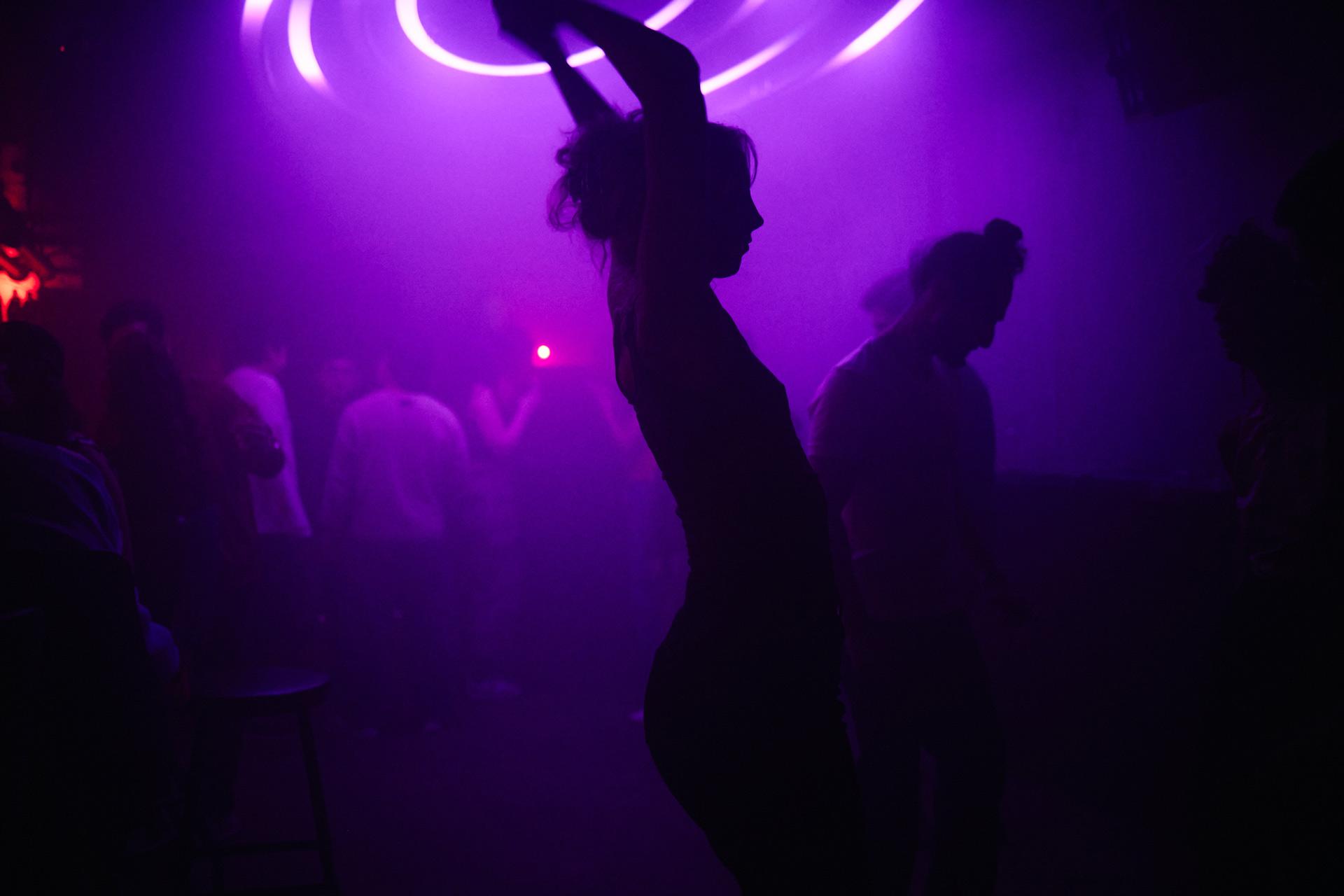
No matter the season, day of the week or time of day, you’re guaranteed to find a party in New York City, along with the like-minded people who will revel beside you. From happy hours at low-key bars or swanky cocktail dens to Manhattan clubs or Brooklyn warehouse parties, you’re bound to find an option that suits your mood.
To capture the energy of NYC nightlife, we took to the streets, photographing party people at hot spots in Bushwick in Brooklyn and Koreatown, Chinatown and the Lower East Side in Manhattan. Just like the City’s many communities, these neighborhoods bring their own scenes, histories and venues to the party.

Bushwick
Photographs by
Ask cool kids around the world where they want to go and the locale on their lips just might be Bushwick. The north Brooklyn neighborhood has a reputation for being inclusive but underground—you don’t need to know the bouncer or have deep pockets make it inside, but the best parties are always word of mouth, so you must be in the know.
It all began in the mid-2000s, when Bushwick was a predominantly Latino neighborhood of immigrants from South and Central America, including a large population of Puerto Rican and Dominican residents who had been living there since the '70s. As Williamsburg in Brooklyn and the Lower East Side in Manhattan grew more expensive, artists and nightlife organizers looked east. In Bushwick, they found inexpensive lofts and former factories that could double as studios and after-hours venues. Underground raves and makeshift warehouse parties flourished, with small collectives driving the scene and pioneering a raw, experimental hub.
Bushwick has changed since, but its raucous mindset remains. Exit the L train at Jefferson Street around 10pm on a Friday or Saturday and you’ll find Wyckoff Avenue bustling with partygoers who are pregaming at a beloved dive bar or hitting one of the clubby spots like
Across Flushing Avenue, one particular Bushwick cocktail den perfectly embodies the neighborhood.


Chinatown and the Lower East Side
Photographs by
The lines between these two party neighborhoods often blur, as they share a geographical border and a mix of both upscale and underground venues. The Lower East Side was already a nightlife hotbed by the mid-1990s. Its punk and hardcore roots from the ’70s and ’80s fed into indie bars and small clubs. By the late ’90s, Chinatown was home to a few semisecret, after-hours spots tucked behind dim sum restaurants. As rents rose in the 2000s, these neighborhoods started to see a rise in craft cocktail bars and mainstream lounges, but those in the know can still find secret parties running late into the night.
Some of the most lauded bars in the world are now in the Lower East Side and Chinatown, so it’s not uncommon to see people lined up at all hours, looking for a taste of what the critics are raving about. The LES in particular is a twentysomething playground, with the streets crowded and rowdy on Friday and Saturday nights. Though tamer during the week, this neighborhood duo is still one of the buzziest zones in Manhattan.
At
NYC Photographer


Koreatown
Photographs by
Looking up at layer upon layer of restaurants, bars and karaoke lounges, one might mistake West 32nd Street for a section of Seoul. In the ’90s, the neighborhood's restaurants, late-night cafés and private karaoke rooms mostly catered to Korean immigrants and students, but that began to change in the 2000s, when K-pop culture started seeping into mainstream American awareness. By the 2010s, New Yorkers of all walks of life were embracing K-town as a bona fide nightlife destination, whether they were settling in at a lively Korean BBQ restaurant or bringing down the house with karaoke and bottles of soju.
These days, Koreatown might be the most action-packed block in the city—
Anyone looking for the latter will find few better places than


Find more stories and details on the nightlife scene in New York City in our